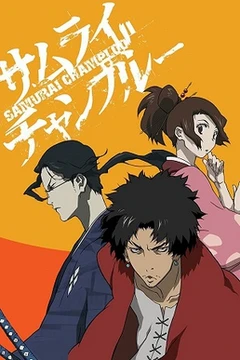
Mugen
A street-smart brawler with a katana and a heart of gold beneath the scars.

Tokumeigakarinoaoshima · CC0
Mugen is a fierce, unconventional warrior defined by his chaotic energy and unique combat style. As one-half of the traveling duo protecting Fuu, he contrasts sharply with the stoic samurai Jin. His journey transforms him from a selfish outlaw into a loyal companion seeking redemption through their shared quest. Unlike traditional ronin bound by strict codes, Mugen operates on instinct and survival. He represents the wilder side of the Edo period, bringing a modern edge to ancient conflicts while forming an unbreakable bond with his unlikely partners.
- Role
- Protagonist / Outlaw
- Weapon
- Katana
- Fighting Style
- Flow Fighting
- Affiliation
- The Traveling Trio
- Status
- Alive
- Origin
- Edo Period Criminal
Verified Timeline
Lore & Background
Mugen emerged from the criminal underworld, often associated with prison escapes and bounty hunting before meeting Fuu. Unlike traditional samurai bound by bushido, he fights for survival and instinct. His background remains shrouded in mystery, though hints suggest a life shaped by hardship and rebellion against rigid societal structures. His fighting technique is legendary for its improvisation, blending swordplay with agile movements reminiscent of street dance. This flow allows him to counter rigid techniques effortlessly. While Jin represents discipline, Mugen embodies freedom, making their partnership a balance of order and chaos essential for the journey's success.
In Their Own Story
The sun dipped below the horizon, casting long shadows over the dusty road. Mugen sat on a wooden post, chewing on a steamed bun while watching the distant silhouette of Jin sharpening his blade. He wiped crumbs from his lips, grinning at the tension in the air. Tonight, there would be no rest for wanderers like them.
Reader's Guide
Mugen wields his katana with reckless abandon, favoring speed and unpredictability over traditional form. His style mimics breakdancing moves, allowing him to strike from impossible angles while spinning or crouching low to evade attacks. He is hot-headed and impulsive, often clashing verbally with Jin's calm demeanor regarding honor. Despite this friction, he possesses deep loyalty once personal bonds are formed. He frequently complains about hunger and money but never abandons his friends when danger strikes unexpectedly. In the journey to find the sunflower samurai, Mugen serves as the muscle and comic relief for the trio. His unconventional methods solve problems that rigid swordsmanship cannot handle, proving that heart often matters more than rank in this chaotic era of wandering warriors.
Did You Know?
- Mugen speaks with a distinct dialect reflecting his outsider status.
- His fighting style incorporates movements similar to breakdancing.
- He is one of the few characters to survive the series finale.
- Mugen initially joined the journey primarily for food and freedom.
Origins and Production Philosophy
Samurai Champloo emerged from the creative vision of director Shinichirō Watanabe, who began conceptualizing the series as early as 1999 while working on other major projects like Cowboy Bebop: The Movie. Official pre-production commenced in 2002 under the banner of studio Manglobe, marking their debut television production. Unlike typical anime productions with rigid scripts, this project embraced an unstructured approach where scenarios underwent multiple revisions to ensure narrative fluidity. Watanabe actively recruited various guest creators to maintain high animation standards throughout the twenty-six episodes that aired between May 2004 and March 2005. The creative team included character designer Kazuto Nakazawa and writers from Office Crescendo, contributing to a unique blend of historical setting and modern sensibilities. This collaborative yet flexible environment allowed for a distinct artistic voice that would later define the show's global appeal.
Narrative Arc and Character Dynamics
The story follows tea waitress Fuu, who saves two opposing warriors, the vagrant outlaw Mugen and the ronin Jin, from execution by forcing them into a journey to find a mysterious samurai who smells of sunflowers. Initially enemies after destroying a tea house in a misunderstanding, their rivalry is temporarily suspended when Fuu wins a coin toss, compelling them to aid her quest. The narrative unfolds as a road movie, featuring episodic adventures that loosely connect until the final arc in the town of Ikitsuki. Here, they confront assassins sent by the government to kill Seizo Kasumi, revealed to be Fuu's father and a participant in the Shimabara Rebellion. In a poignant conclusion, Fuu reconciles with her dying father, while Mugen and Jin finally duel without killing one another, acknowledging their newfound friendship before parting ways.
Thematic Depth and Cultural Synthesis
Set in a fictionalized Edo period Japan, the series deliberately blends traditional samurai culture with anachronistic elements like hip hop music to explore themes of individuality and tolerance. Director Watanabe aimed to challenge historical conformism by highlighting minorities such as the Ainu people, Christians, and LGBT characters within a setting known for isolationism. The title itself derives from 'chanpurū,' an Okinawan term meaning mixture, reflecting the show's fusion of disparate cultural influences. By comparing samurai philosophy to hip hop self-identity, the series reinforces its focus on counter-cultural acceptance. This thematic approach was also influenced by actor Shintaro Katsu's historical dramas and his unstructured directing style, ensuring the story prioritized character identity over strict historical accuracy.
Global Reception and Musical Landscape
The anime achieved significant commercial success in Western markets after being licensed for broadcast on Adult Swim in North America and released commercially by Geneon Entertainment and later Crunchyroll. International distribution extended to the United Kingdom via MVM Films and Australia/New Zealand through Madman Entertainment, alongside a manga adaptation serialized in Monthly Shōnen Ace. A critical pillar of its acclaim was the soundtrack composed by renowned hip hop artists including Nujabes, Fat Jon, and Shinji 'Tsutchie' Tsuchida of Shakkazombie. Critics praised the seamless integration of this music with the animation, noting how it enhanced the show's unique atmosphere. The series is widely celebrated for its high-quality visuals and innovative storytelling, cementing its status as a landmark production in anime history.
Gallery


Frequently Asked Questions
Who is Mugen?
Mugen is a street-smart outlaw and main protagonist who fights with a katana using breakdancing-inspired moves. He joins Fuu’s quest to find a samurai smelling of sunflowers despite his initial selfish nature.
What defines his fighting style?
Mugen employs Flow Fighting, which mixes swordsmanship with hip-hop rhythms and acrobatic agility. This unconventional approach lets him overwhelm opponents who rely on traditional discipline.
How does he contrast with Jin?
Unlike the stoic samurai Jin, Mugen operates on instinct rather than strict bushido codes or honor. Their opposing personalities often clash but eventually forge a deep mutual respect during their travels.
Does his personality change over time?
Initially a selfish criminal seeking only freedom, he grows into a loyal companion who values his friends above himself. His journey transforms him from an isolated fighter into someone capable of genuine sacrifice.
What is Mugen’s fate in the finale?
He survives the series and reunites with Jin briefly before deciding to continue his wandering life alone. Although they fail to identify the sunflower samurai, he leaves on good terms with his partners.