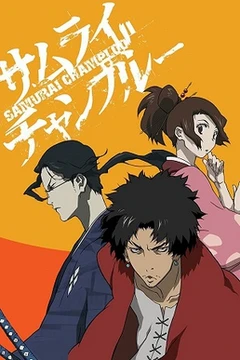
Ronin
Masterless swords drifting through a world where tradition clashes with the beat of the future.

Kapitel · CC BY-SA 4.0
In the world of Samurai Champloo, a Ronin is a masterless samurai who has lost their lord or chosen to abandon the rigid feudal hierarchy for a life of wandering. Unlike traditional historical depictions where such figures might be seen as outcasts seeking redemption, this universe presents them as fluid agents of change, often blending honor with necessity. They serve as the primary protagonists and antagonists throughout the journey, embodying the show's central theme of individuals navigating a chaotic society without fixed anchors. The Ronin in this setting are not merely warriors; they are cultural chameleons who exist at the intersection of Edo-period tradition and anachronistic modernity. Their role is to challenge the status quo, whether through combat or simply by existing outside the law's grasp. They represent freedom from duty, yet often find themselves bound by personal codes of loyalty that transcend feudal obligation.
- Role
- Masterless Samurai / Wanderer
- Affiliation
- None (Independent)
- Key Archetypes
- Fighting Style Masters, Drifters
- First Appears
- Episode 1: 'Open Your Eyes'
- Status
- Active throughout the series
- Defining Trait
- Mobility and Adaptability
Lore & Background
The existence of these masterless warriors is central to the show's unique atmosphere, which reimagines Japan's Edo period as a melting pot of eras. While historically Ronin were often desperate men seeking new employment or facing poverty, in this narrative they are elevated to a state of philosophical freedom. They carry their swords not for a lord's banner, but for personal survival, justice, or the pursuit of a singular goal that defines their existence. This status allows them to interact with all levels of society, from the lowest street thugs to high-ranking officials, without being bound by strict social etiquette. Their fighting styles reflect this diversity; some adhere to rigid, traditional forms passed down through generations, while others adopt fluid, improvised movements that mirror the show's hip-hop influences. This duality creates a dynamic tension where ancient honor codes are constantly tested against modern sensibilities and survival instincts. The journey of these characters often involves shedding past traumas or identities to forge a new path. Whether seeking a specific flower, a lost person, or simply a reason to keep moving forward, the Ronin's story is one of constant motion. They are the embodiment of the show's title: 'champloo,' meaning mixed up, as they mix the old world with the new in their very souls.
In Their Own Story
The sun dipped low behind the thatched roofs of a nameless village, casting long shadows across the dirt road. Mugen leaned against a wooden post, his straw hat pulled low, watching the dust settle from a recent skirmish. He didn't care about the honor codes the villagers whispered about; he only cared about the rice ball in his hand and the next town on the horizon. Beside him, Jin stood perfectly still, his katana sheathed but his eyes sharp, scanning the tree line for threats that might not exist anymore. They were two different kinds of masterless men, bound by a stranger's quest yet free from any lord's command. As the distant sound of a beatbox echoed faintly from a hidden alleyway, they both knew their path was never straight, only a rhythm waiting to be stepped into.
Reader's Guide
The show's identity is built on a seamless fusion of Edo-period aesthetics with contemporary hip-hop culture, creating a unique 'hip-hop samurai' vibe. This isn't just background noise; the music dictates the pacing of fights and the mood of travel sequences. Specific tracks often mirror the fighting styles of the Ronin protagonists. When Mugen engages in battle, the soundtrack shifts to breakbeats and funk, emphasizing his erratic, improvisational jujitsu-like swordplay. Conversely, when Jin draws his blade, the music often transitions into smooth jazz or soulful R&B, reflecting his disciplined, precise, and traditional Kenjutsu. This musical layering transforms every episode into a rhythmic journey. The Ronin are not just fighting enemies; they are moving to an invisible beat that transcends time. This fusion allows the narrative to explore themes of freedom and rebellion in a way that feels both historically grounded and refreshingly modern, making the world feel alive and unpredictable. The cultural elements extend beyond music to fashion and slang, further cementing the Ronin as figures who exist between worlds. Their casual demeanor amidst high-stakes violence highlights the show's core message: that style and substance can coexist in a chaotic universe.
Did You Know?
- The term 'Ronin' literally translates to 'wave man,' symbolizing someone drifting aimlessly like a wave without an ocean.
- The fighting choreography often mimics the movements of breakdancing, particularly for the character known as Mugen.
- Many episodes feature historical figures or events reimagined through this unique musical and cultural lens.
- The show's soundtrack was curated by a renowned hip-hop producer to ensure every track matched the specific energy of the scene.
Etymology and Cultural Definition
The term rōnin originates from the kanji for 'wave' and 'person,' literally translating to a 'drifter' or someone unrestrained like water on the ocean. While modern Japanese usage applies this label to unemployed salarymen or students failing university entrance exams, its historical roots are far more complex. Emerging during the Nara and Heian periods, it initially described serfs who had fled their masters' lands before evolving to denote masterless samurai in medieval times. In those earlier eras, these figures were often depicted as dishonorable shadows of true warriors, lacking a fixed place or allegiance. The word encapsulates a state of being unmoored from the rigid social structures that defined feudal Japan, representing individuals who had severed ties with their clans or families. This linguistic evolution reflects a shift from describing a runaway laborer to identifying a specific class of displaced nobility, carrying connotations of vagrancy and a lack of honor in the eyes of society.
Social Status and Legal Restrictions
Under the strict Bushido code, a samurai was expected to commit ritual suicide upon losing his master; those who refused faced immense shame and were branded as rōnin. This status was not merely a personal failure but a social stigma enforced by daimyō and fellow warriors, effectively ostracizing them from the warrior class. During the Edo period, rigid shogunate laws exacerbated this plight by forbidding former samurai from legally changing trades or seeking new masters without explicit permission. Consequently, many rōnin were left in poverty, unable to utilize their skills for legitimate employment. Although they retained the right to carry two swords and often wielded other weapons like staffs or bows depending on their martial school, their lack of a stipend or land made them targets for discrimination. The shogunate initially viewed them as dangerous elements, banning them from cities or restricting their living quarters, which forced many into desperate measures just to survive in a society that offered them no legal path forward.
Historical Evolution and Economic Reality
The trajectory of the rōnin changed drastically across different historical eras. During the chaotic Sengoku period, the bond between lord and vassal was loose, allowing warriors to switch masters or even rise to become daimyō themselves; some, like Tōdō Takatora, served ten different lords. However, as unification progressed under Toyotomi Hideyoshi and later the Tokugawa shogunate, the need for standing armies diminished, leading to mass dismissals following conflicts like the Battle of Sekigahara. By the time of Shogun Iemitsu, the number of rōnin swelled to nearly half a million due to fief confiscations. With peaceful times reducing military demand and laws restricting occupational mobility, many turned to farming or became townspeople, though most lived in destitution. A few sought adventure overseas as mercenaries, while others joined uprisings like the Keian Uprising of 1651, eventually forcing the shogunate to relax restrictions on inheritance and service to quell unrest.
Lifestyle Choices and Criminal Legacy
Deprived of legitimate employment options, many rōnin turned to alternative means of survival that often tarnished their reputation. Some sought steady work as mercenaries guarding trade caravans or serving as bodyguards for wealthy merchants, utilizing their martial skills legally. However, a significant portion descended into criminality, operating as bandits, highwaymen, or petty thieves. They frequently served as hired muscle for organized crime syndicates running gambling rings, brothels, and protection rackets in urban centers. This association with thuggery cemented an image of the Edo-period rōnin as disgraceful cutthroats and bullies rather than honorable warriors. Even after the abolition of the samurai class, some continued these illicit activities, participating in notorious events like the 1895 assassination of Korean Empress Myeongseong. Conversely, a few chose to embrace their status creatively; writer Kyokutei Bakin voluntarily became a rōnin to pursue literature, illustrating that while many fell into crime, others found new paths outside the rigid warrior caste.
Gallery


Frequently Asked Questions
Who counts as a ronin in Samurai Champloo?
In this series, a ronin is defined as a masterless samurai who wanders without allegiance to any feudal lord. Characters like Jin and Mugen fit this description, living outside the rigid social hierarchy.
What role do ronin play in the story?
They serve as the primary protagonists who protect Fuu while searching for a specific samurai with the scent of sunflowers. Their mobility allows them to navigate the chaotic society without fixed anchors or obligations.
How does the journey for the main ronin end?
After finding their target, Jin and Mugen part ways to pursue their own individual paths in life. The series concludes with both characters accepting that their time traveling together has naturally come to a close.
Why are ronin significant to the show's themes?
They represent fluid agents of change who blend personal honor with necessity rather than strict tradition. This dynamic highlights the clash between old-world discipline and the emerging modern culture of the Edo period.
Do all ronin fight using traditional samurai techniques?
No, because their fighting styles reflect their unique backgrounds and personalities within the world. While Jin uses disciplined kenjutsu, Mugen employs a freestyle approach that mirrors the show's hip-hop influences.