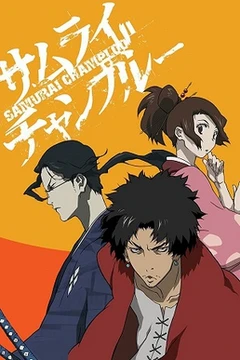
Tokugawa Yoshimune
The distant ruler whose shadow defines the ronin's path through Edo.

via Wikipedia: Oniwaban · see source
Tokugawa Yoshimune serves as the historical anchor for the political backdrop of the Samurai Champloo universe, representing the authority of the Tokugawa Shogunate during the Edo period. While he does not appear as a primary character in the narrative, his reign defines the societal structure that shapes the lives of ronin like Jin and Mugen. The series uses this historical setting to contrast rigid feudal laws with the free-spirited journey of the protagonists.
- Role
- Shogun (Historical Context)
- Affiliation
- Tokugawa Shogunate
- Era
- Edo Period
- Status
- Historical Backdrop
Lore & Background
Though rarely seen directly, the Shogun's influence permeates the streets of Edo. Guards patrol with the weight of his name behind them, and travelers like Fuu must navigate a land where loyalty to one's lord is paramount. The existence of ronin themselves is a testament to the shifting tides of power during this time.
In Their Own Story
The wind carries dust through the main gate of Edo Castle, where shadows stretch long across polished wooden floors. In the distant hall, the Shogun reviews scrolls, unaware that two wanderers walk his streets below. One swings a blade with the rhythm of a drum beat; the other moves like smoke. They do not seek power or titles, only a fleeting moment of peace in an era defined by rigid control.
Reader's Guide
The show’s identity thrives on the collision of rigid Edo hierarchy with modern hip-hop freedom. Tokugawa Yoshimune’s historical reign enforced strict sumptuary laws, yet the series subverts this through its soundtrack. Nujabes’ smooth jazz beats overlay traditional settings, creating a sonic rebellion against the Shogunate's order. When Jin walks through the streets, the silence of the law is broken by turntables scratching in his mind. This fusion mirrors the cultural explosion of the Genroku era, which Yoshimune’s later reforms attempted to regulate but could not stop. The music represents the ronin spirit—unbound by feudal loyalty or strict class structures. It gives voice to the marginalized travelers who exist outside the Shogun's direct control. Specific tracks blend ancient instruments like the shakuhachi with boom-bap drums, symbolizing how the past and present coexist in this world. This aesthetic choice highlights that while Yoshimune ruled the land politically, the culture of the streets flowed freely beneath his feet. The hip-hop elements serve as an auditory metaphor for the characters' journey against authority, proving that rhythm transcends time.
Did You Know?
- Historically, Tokugawa Yoshimune was the eighth Shogun of the Tokugawa dynasty.
- His reign saw a flourishing of arts like kabuki, which parallels the show's theatrical fight choreography.
- The series uses his era to contextualize the existence of masterless samurai wandering Japan.
- Despite defining the setting, he has no direct dialogue or active role in the main plot.
Frequently Asked Questions
Who is Tokugawa Yoshimune in Samurai Champloo?
He acts as the historical Shogun providing the political framework for the Edo period setting in the anime. While absent from direct scenes, his governance dictates the social boundaries faced by the main characters.
What role does Tokugawa Yoshimune play in the story?
He serves as a distant authority figure whose shadow defines the ronin's path through Edo society. His existence contrasts rigid feudal laws with the free-spirited journey of Jin and Mugen.
Does Tokugawa Yoshimune appear in Samurai Champloo?
No, he does not appear as an active participant in the plot. Instead, his reign provides the historical context that shapes the world around the protagonists.
Why is Tokugawa Yoshimune important to the series' setting?
His authority represents the oppressive structure of the Tokugawa Shogunate that the wanderers navigate daily. This figure anchors the timeline to a specific era defined by strict social hierarchy.
How does the show portray the era of Tokugawa Yoshimune?
The series uses this period to highlight the tension between government control and individual freedom. It defines the environment where ronin like Jin must survive without a master.